



Our Story
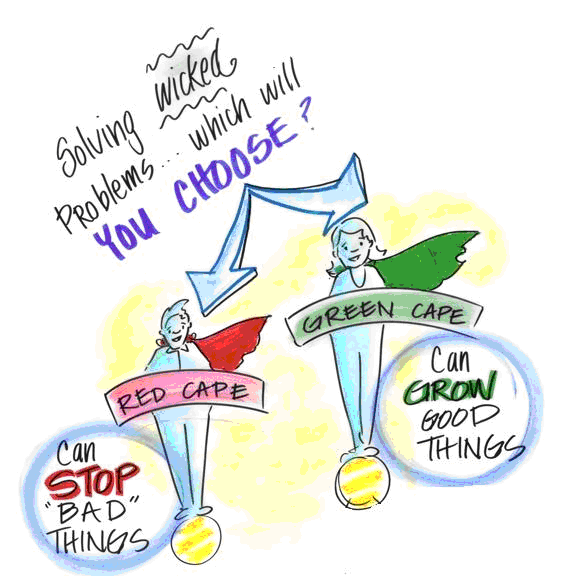 The Cookbook Project (CBP) is a ‘Green Cape’ solution to the global health epidemic that has been projected to cost the global economy an estimated $47,000,000,000,000 (that’s 47 trillion dollars) over the next 20 years. Co-Founders Adam Aronovitz and Alissa Bilfield developed the CBP model of programming over the course of 10 years of travelling and volunteering in more than 65 countries in response to their astonishment at the level of chronic disease worldwide.
As a public school teacher in the Boston Public School system Adam was working closely with 6th-8th grade students who had recently immigrated to the United States. He noticed that when students first arrived and were integrated into the US education system they were energetic, enthusiastic, and confident in class despite significant language and cultural obstacles. He was shocked however to notice a disturbing and shocking trend within two months of his students arrival in the US. During this short period students began to struggle physically, emotionally, and academically and after speaking with many students came to the conclusion that one of the major shifts was in their diet. In their home countries the most inexpensive and accesible food tended to be fruits, vegetables, high quality grains, and local protein but as their families settled in the US the most inexpensive and accesible food shifted to highly processed, chemically based foods that were being aggressively advertised to their families and the impact on their health was horrifying.
Adam was discouraged that prescription medication was often the first suggestion to solve academic and focus issues in the classroom but he was confident that the cause of these issues was predominantly dietary. To a certain extent he realized that extending the school day, adding in more math/english classes at the expense of enrichment courses could only accomplish so much if students were essentially made up of garbage: after all, ‘we are what we eat’. Not only was the processed-food diet impairing their physical health and their self-esteem but the effect on children’s cognitive abilities was truly shocking and is one of the primary obstacles for our national education system.
As Adam pondered these issues and became more involved in the health field found himself teaching English in Hanoi, Vietnam and was surprised to hear that young Vietnamese children proclaimed their favorite foods were pizza, and fast food style fried chicken, both habits exported from the US. The childhood obesity epidemic that has become common in the US over the past two decades was starting to manifest in the developing world, in places that have incredible food cultures and unparalleled access to fresh fruits and vegetables. Not only were Vietnamese youth craving these foods but they were developing an inferiority complex about their traditional food culture which is amongst the healthiest on earth. He drew on his experience as an educator in the traditional classroom and in the experiential education field to collaborate with Alissa in designing a hands-on health curriculum that puts at-risk youth at the center of the educational process and empowers youth to be the catalysts of change in their own kitchen and in their communities.
As an environmental policy planner with an eye on sustainable development issues Alissa observed disturbing trends in global agriculture and consumption. Mono-cropping, over-reliance on pesticides, and the factory farming of domesticated animals have all resulted in serious environmental issues. These unsustainable agricultural practices have also created HUGE food insecurity issues both in the USA and abroad. Not to mention the effects on human health, which are sometimes felt immediately, but often not until a decade or so later. Alissa began to work in the food justice movement, specifically on issues of sustainable urban agriculture and equal access to fresh, healthy, and affordable foods. In the food desert of the Roxbury/Dorchester neighborhood of Boston, to the fast-food infested streets of Oakland, to the shocking influx of processed foods all over the developing world, Alissa saw that what was missing was an appreciation of local food culture, and the skills to prepare such meals.
Together, Alissa and Adam have created an engaging and unique experiential education model to engage youth through the lens of food culture and cooking. By valuing local food culture and teaching cooking and preparation techniques interwoven with experiential games and activities, youth become empowered to be the catalysts for change in their own communities. CBP founders also saw a need to train leaders already doing similar work in their own communities, in order to create real change around the world. The Local Leaders Program and the Summer Intern Program allows the impact of The Cookbook Project’s curriculum to be spread and transferred to communities at the global level!